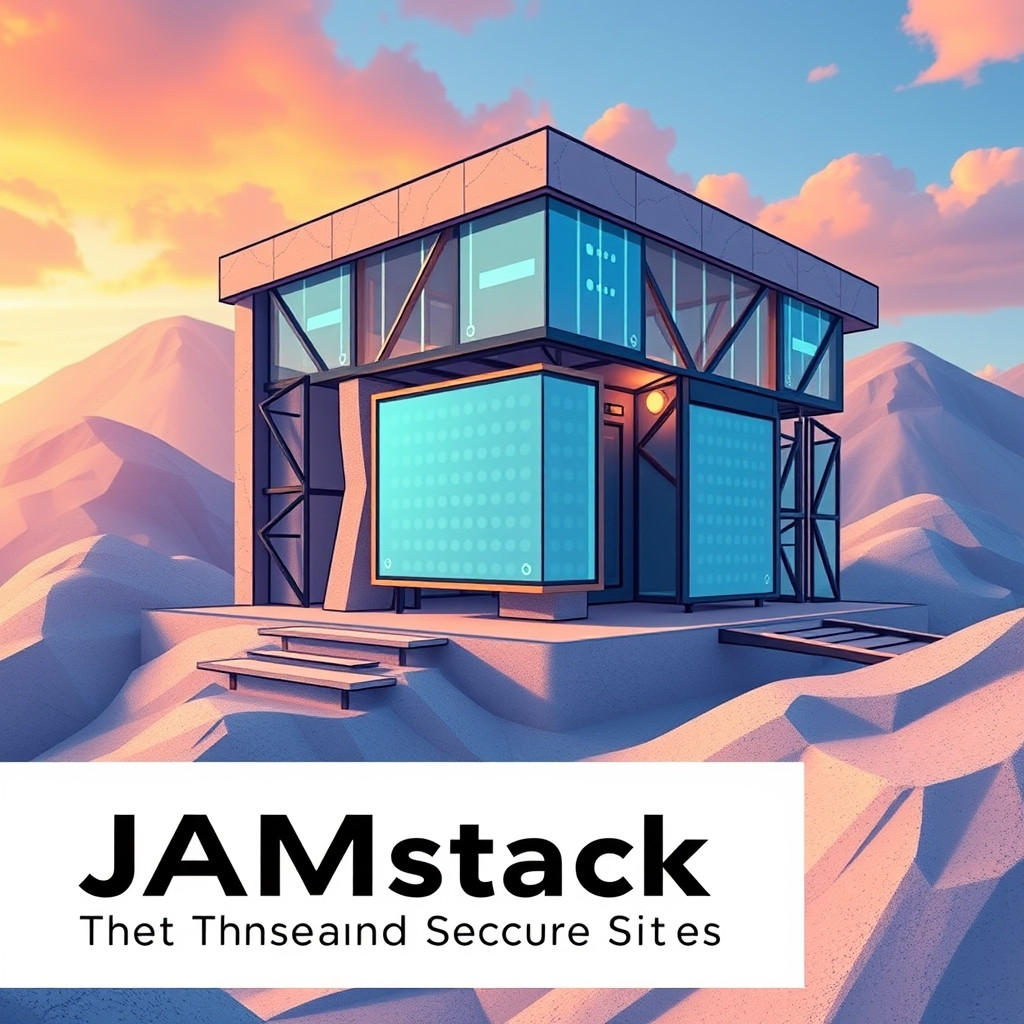
JAMstack Architecture: The Future of Fast and Secure Sites
In today’s fast-paced digital world, your website is often the first point of contact for potential clients and a critical pillar of your brand’s credibility. It’s more than just an online brochure; as we often say at Doterb, “A website is not just a display – it’s your company’s digital trust representation.” This underscores the paramount importance of performance, security, and scalability. Traditional web architectures, while robust, can sometimes struggle to meet these demands without significant overhead. This is where JAMstack emerges as a revolutionary approach, promising a future of websites that are not only incredibly fast and secure but also a pleasure to manage and develop.
Table of Contents
- What is JAMstack? Deconstructing the Acronym
- Why JAMstack? The Unbeatable Advantages
- When to Consider JAMstack for Your Business
- Doterb’s Approach to JAMstack Implementation
- Frequently Asked Questions About JAMstack
What is JAMstack? Deconstructing the Acronym
JAMstack isn’t a specific technology; it’s an architectural paradigm. It stands for JavaScript, APIs, and Markup – a modern way to build websites and applications that delivers better performance, higher security, lower cost of scaling, and a superior developer experience.
JavaScript: The Dynamic Core
In a JAMstack setup, all dynamic functionalities are handled by client-side JavaScript. This means that interactive elements, user authentication, form submissions, and more are powered by JavaScript running directly in the user’s browser, eliminating the need for a server-side application layer for every request.
APIs: Connecting Everything
Any server-side process, database interactions, or third-party services are abstracted into reusable APIs (Application Programming Interfaces). These could be headless CMS platforms, payment gateways, authentication services, or custom serverless functions. This decoupling allows for greater flexibility and the ability to integrate best-of-breed services without managing complex backend infrastructure.
Markup: Pre-built and Fast
The “M” in JAMstack refers to pre-built Markup, usually HTML files that are generated at deploy time using a Static Site Generator (SSG). Instead of rendering pages on demand with every user request, JAMstack sites serve pre-rendered HTML, CSS, and JavaScript files directly from a Content Delivery Network (CDN). This approach vastly improves loading speeds and reduces server strain.
Why JAMstack? The Unbeatable Advantages
Embracing JAMstack offers a compelling set of benefits for businesses looking to enhance their digital presence.
Blazing Fast Performance
Since pages are pre-built and served from CDNs, content is delivered to users globally with minimal latency. This leads to faster loading times, which is crucial for user experience, SEO rankings, and conversion rates.
Enhanced Security
By removing the traditional server-side application layer and databases that are often targeted by malicious attacks, JAMstack significantly reduces the attack surface. Backend logic is handled by specialized third-party APIs or serverless functions, which are often more secure and professionally managed.
Simplified Scalability
Static assets are inherently scalable. When traffic spikes, CDNs can easily handle the load without requiring complex server scaling strategies. This means your site remains performant even under heavy demand, without significant infrastructure overhead.
Improved Developer Experience
JAMstack development often involves modern build tools, streamlined workflows, and a focus on modularity. Developers can work with their preferred frameworks and tools, leading to faster development cycles and easier maintenance.
Lower Costs
Reduced server infrastructure needs, simplified hosting (often free or very low cost for static sites), and efficient development processes can translate into significant cost savings on hosting, maintenance, and development.
When to Consider JAMstack for Your Business
While JAMstack isn’t a one-size-fits-all solution, it’s an excellent choice for a wide range of projects.
Content-focused Websites (Blogs, Portfolios)
For sites primarily focused on delivering content, such as corporate blogs, portfolios, or news sites, JAMstack provides unmatched speed and ease of content management through headless CMS integration.
E-commerce Stores (with static site generators + APIs)
Modern e-commerce platforms can leverage JAMstack by using static site generators for product pages and integrating with e-commerce APIs for shopping carts, checkout processes, and order management. This offers a highly performant and secure shopping experience.
Corporate Websites and Landing Pages
Businesses needing a professional, high-performance online presence for their brand, marketing campaigns, or lead generation can greatly benefit from JAMstack’s speed and reliability.
Web Applications Requiring High Performance
For web applications where a fast initial load and responsive user interface are critical, JAMstack can provide the foundation for a superior experience, with dynamic functionalities handled by APIs.
Doterb’s Approach to JAMstack Implementation
At Doterb, we are at the forefront of leveraging cutting-edge technologies like JAMstack to deliver exceptional web development and IT solutions. Our expertise in website creation, system integration, and digital transformation allows us to craft bespoke JAMstack solutions that align perfectly with your business objectives. We focus on building performant, secure, and scalable websites that not only look great but also drive real business value. From selecting the right Static Site Generator (e.g., Next.js, Gatsby, Hugo) to integrating robust APIs for dynamic content and backend services, we ensure a seamless and efficient development process that future-proofs your digital presence.
Frequently Asked Questions About JAMstack
Q1: Is JAMstack suitable for dynamic websites?
A: Absolutely! While the “M” for Markup refers to pre-built content, dynamic elements are handled by JavaScript and APIs. You can have user logins, comments, real-time data updates, and e-commerce functionalities by integrating various APIs and serverless functions.
Q2: Does JAMstack mean I can’t have a backend or database?
A: Not at all. JAMstack decouples the frontend from the backend. Your backend (database, server logic) still exists, but it’s accessed through APIs. This could be a headless CMS, a cloud database accessed via API, or custom serverless functions, keeping the core site static and secure.
Q3: What tools or technologies are commonly used in JAMstack?
A: Common tools include Static Site Generators (SSGs) like Next.js, Gatsby, Hugo, Astro, or Eleventy; frontend frameworks like React, Vue, or Angular; headless CMS platforms such as Contentful, Strapi, or Sanity; and hosting on CDNs like Netlify, Vercel, or AWS Amplify. APIs can range from Stripe for payments to Auth0 for authentication.
The digital landscape is constantly evolving, and staying ahead means embracing architectures that prioritize user experience and operational efficiency. JAMstack is not just a trend; it’s a foundational shift towards a more resilient, performant, and secure web. If your business is ready to explore the immense benefits of a fast, secure, and scalable website or digital system, contact the Doterb team today. Let us help you transform your digital presence and build the future, one byte at a time.