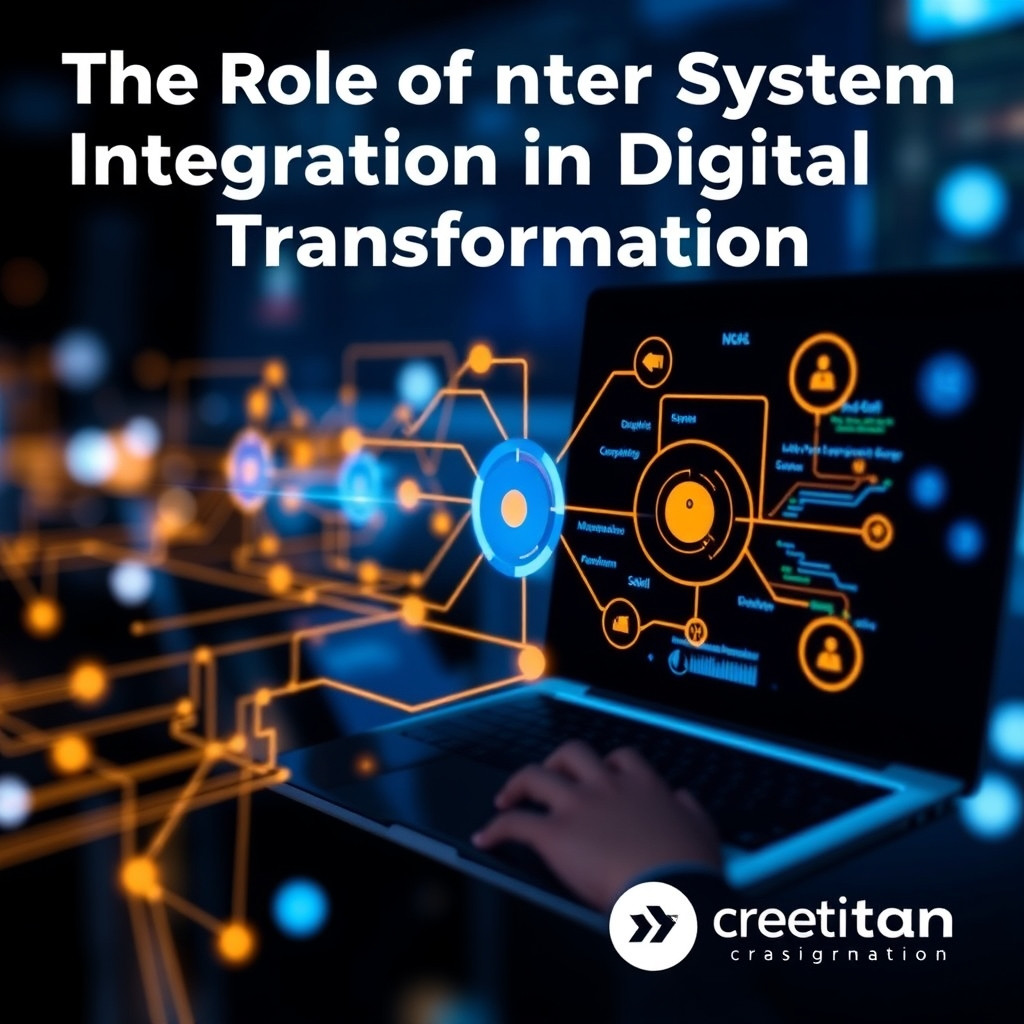
Beyond Silos: The Critical Role of Inter-System Integration in Driving Digital Transformation
In today’s rapidly evolving digital landscape, businesses are constantly seeking ways to enhance efficiency, improve customer experience, and stay competitive. Digital Transformation is the key, but it’s often perceived as merely adopting new technologies. The true power, however, lies not just in acquiring new systems, but in how seamlessly these systems communicate and collaborate. This is where inter-system integration becomes the unsung hero, unifying disparate components into a cohesive, powerful digital ecosystem.
Table of Contents
- Understanding Digital Transformation in Today’s Business Landscape
- The Challenge of Siloed Systems
- Inter-System Integration: The Unifying Force
- The Doterb Approach to Seamless Integration
- Frequently Asked Questions (FAQ)
Understanding Digital Transformation in Today’s Business Landscape
Digital Transformation (DT) is more than just upgrading software or building a new website. It’s a fundamental shift in how a business operates, leverages technology, culture, and processes to deliver value to customers and adapt to changing market demands. It involves reimagining business models, customer journeys, and internal operations using digital tools. For many companies, DT is no longer an option but a necessity for survival and growth in an increasingly digital-first world.
The Challenge of Siloed Systems
As businesses grow, they often accumulate a variety of software applications and platforms. This might include a CRM, ERP, accounting software, e-commerce platforms, marketing automation tools, and various internal operational systems. While each system might be effective in its specific domain, problems arise when they operate in isolation. These “siloed systems” create:
- Data Inconsistencies: Different systems holding conflicting or outdated information.
- Manual Processes & Redundancy: Employees spending valuable time manually transferring data between systems, leading to errors and inefficiency.
- Lack of Holistic View: Inability to get a complete, real-time picture of business operations or customer interactions.
- Hindered Decision-Making: Decisions based on incomplete or fragmented data.
- Poor Customer Experience: Inconsistent service or communication across different touchpoints.
Inter-System Integration: The Unifying Force
Inter-system integration is the process of connecting disparate IT systems and applications, enabling them to communicate, share data, and work together as a cohesive unit. This unification breaks down silos, creating a single source of truth and unlocking unprecedented operational efficiencies and insights. It’s the architecture that underpins true digital transformation.
Streamlined Operations & Efficiency
By automating data flow between systems, businesses can eliminate manual data entry, reduce errors, and accelerate processes. For example, an integrated system can automatically update inventory levels when a sale is made, trigger shipping notifications, and update accounting records—all without human intervention. This frees up staff to focus on higher-value tasks and significantly improves operational efficiency.
Enhanced Data Accuracy & Insights
Integration ensures that data is consistent and up-to-date across all platforms. This accurate, real-time data becomes a powerful asset, providing a comprehensive 360-degree view of your business, customers, and market trends. With better data, companies can uncover valuable insights, identify opportunities, and make more informed strategic decisions.
Improved Customer Experience
In an integrated environment, customer data is accessible across sales, marketing, and support teams. This means customer service agents have a full history of interactions, purchases, and preferences, allowing them to provide personalized and efficient support. Marketing campaigns can be more targeted, and sales efforts can be more effective, leading to a superior and consistent customer journey.
Scalability & Future-Proofing
A well-integrated architecture is inherently more flexible and scalable. As your business grows and adopts new technologies, integration makes it easier to onboard new systems without disrupting existing operations. It creates a robust foundation that can adapt to future changes and innovations, ensuring your digital infrastructure remains agile and relevant.
The Doterb Approach to Seamless Integration
At Doterb, we understand that digital transformation is a journey, not a destination. Our expertise in web development, system integration, and comprehensive IT solutions positions us uniquely to help businesses navigate this complex landscape. We specialize in creating bespoke integration strategies that connect your critical systems, whether it’s linking your e-commerce platform with your CRM, automating data flow between your ERP and marketing tools, or building custom APIs to bridge unique applications.
We believe that “A website is not just a display it’s your company’s digital trust representation.” This trust is built on reliability, consistency, and seamless functionality—all of which are underpinned by robust inter-system integration. Your website, as the face of your digital presence, must connect flawlessly with your backend operations to deliver on its promise of efficiency and exceptional user experience.
Doterb helps you transform fragmented systems into a unified, intelligent ecosystem, empowering your business to operate more efficiently, gain deeper insights, and deliver unparalleled customer experiences.
Frequently Asked Questions (FAQ)
Q1: What exactly is inter-system integration and why is it crucial for my business?
A1: Inter-system integration is the process of connecting different software applications, databases, and IT systems within your organization so they can communicate and share data seamlessly. It’s crucial because it breaks down data silos, automates workflows, improves data accuracy, enhances operational efficiency, and provides a unified view of your business, which are all vital for effective digital transformation and competitive advantage.
Q2: Is inter-system integration only for large enterprises, or can small to medium-sized businesses (SMBs) benefit too?
A2: Inter-system integration is highly beneficial for businesses of all sizes, including SMBs. While large enterprises might have more complex systems, SMBs often grapple with limited resources and the need to maximize efficiency. Integration helps SMBs automate tasks, improve customer service, reduce manual errors, and scale their operations effectively without needing to hire extensive staff for data management, giving them a competitive edge.
Q3: What are the common challenges faced during system integration projects?
A3: Common challenges include data migration complexities (ensuring data integrity and consistency), compatibility issues between legacy and modern systems, security concerns (protecting data during transfer and storage), managing scope creep, and ensuring user adoption of new integrated workflows. Choosing the right integration strategy and partner is key to overcoming these challenges.
Q4: How long does a typical system integration project take?
A4: The timeline for a system integration project varies significantly based on its complexity, the number of systems involved, the volume of data, and specific business requirements. A smaller integration project (e.g., connecting a CRM to an email marketing tool) might take a few weeks, while large-scale integrations involving multiple legacy systems and custom development can extend to several months or even over a year. A thorough assessment phase is critical to provide a realistic timeline.
If your business is struggling with disconnected systems, seeking to enhance operational efficiency, or ready to embark on a comprehensive digital transformation journey, Doterb is here to help. Contact the Doterb team today to discuss how our expert web development and system integration services can build a unified, powerful digital future for your company.